
Investor FAQs
Find answers to common questions about Ultrablanket and our mission to transform prenatal care.
Corporate Governance
At Ultrablanket, we uphold governance practices that prioritize ethical leadership, accountability, and transparency to ensure our mission is fulfilled with integrity.
Executive Management
Find answers to common questions about Ultrablanket and our mission to transform prenatal care.
Ultrablanket stands out from traditional and emerging ultrasound technologies by offering a fully automated, operator-independent fetal scanning solution that is accessible, efficient, and scalable.
Unlike conventional ultrasound systems that require highly trained sonographers, Ultrablanket automates the scanning process, enabling use by nurses or general healthcare workers. This makes it particularly valuable in low- and middle-income countries (LMICs) where access to skilled professionals is limited. In contrast to at-home self-scanning devices—which often lack clinical oversight—and robotic arm systems that are costly, experimental, and potentially intimidating to patients, Ultrablanket offers a practical, patient-friendly alternative.
Key differentiators include:
Ultrablanket combines the precision of medical-grade imaging with the simplicity of automated operation—helping scale quality prenatal care globally.
Ultrablanket operates within the medical imaging market, with a specific focus on obstetrics and gynaecology (OB-GYN), particularly maternity care. While the technology has the potential to support a broad range of ultrasound applications, its current deployment is centred on automating fetal ultrasound scanning during pregnancy.
By targeting prenatal care, Ultrablanket addresses a critical global need—improving access to quality maternal imaging in both high-resource settings and underserved regions. This strategic focus allows the device to deliver the impact where consistent, reliable, and early fetal assessments are essential for maternal and neonatal health.
Ultrablanket is positioned for strong growth, driven by key trends in maternal health, medical technology, and global healthcare access:
Together, these trends support Ultrablanket’s mission to make high-quality maternal imaging widely available, scalable, and efficient across diverse healthcare settings.
Ultrablanket is currently under active development and has not yet received regulatory approval. The project is in the preclinical phase, with plans to initiate the regulatory approval process in its second year of development. This will include engaging with relevant authorities—such as the FDA and CE marking bodies—to ensure compliance with medical device standards and safety regulations.
Regulatory planning is a core part of the development roadmap, with clinical validation and safety testing prioritised to support future approval and market entry.
We welcome interest from investors who share our vision of transforming maternal healthcare through innovative ultrasound technology. To explore investment opportunities with Ultrablanket, please contact our team directly at investors@ultrablanket.org . We’ll be happy to provide more information and discuss how you can get involved.
Corporate Governance at Ultrablanket
At Ultrablanket, we uphold governance practices that prioritize ethical leadership, accountability, and transparency to ensure our mission is fulfilled with integrity.”
”En Ultrablanket, mantenemos prácticas de gobernanza que priorizan el liderazgo ético, la rendición de cuentas y la transparencia para garantizar que nuestra misión se cumpla con integridad.
Governance Documents and Policies
Committee Charters of the Board of Directors
Ultrablanket stands out from traditional and emerging ultrasound technologies by offering a fully automated, operator-independent fetal scanning solution that is accessible, efficient, and scalable.
Unlike conventional ultrasound systems that require highly trained sonographers, Ultrablanket automates the scanning process, enabling use by nurses or general healthcare workers. This makes it particularly valuable in low- and middle-income countries (LMICs) where access to skilled professionals is limited. In contrast to at-home self-scanning devices—which often lack clinical oversight—and robotic arm systems that are costly, experimental, and potentially intimidating to patients, Ultrablanket offers a practical, patient-friendly alternative.
Key differentiators include:
Ultrablanket combines the precision of medical-grade imaging with the simplicity of automated operation—helping scale quality prenatal care globally.
Ultrablanket operates within the medical imaging market, with a specific focus on obstetrics and gynaecology (OB-GYN), particularly maternity care. While the technology has the potential to support a broad range of ultrasound applications, its current deployment is centred on automating fetal ultrasound scanning during pregnancy.
By targeting prenatal care, Ultrablanket addresses a critical global need—improving access to quality maternal imaging in both high-resource settings and underserved regions. This strategic focus allows the device to deliver the impact where consistent, reliable, and early fetal assessments are essential for maternal and neonatal health.
Ultrablanket is positioned for strong growth, driven by key trends in maternal health, medical technology, and global healthcare access:
Together, these trends support Ultrablanket’s mission to make high-quality maternal imaging widely available, scalable, and efficient across diverse healthcare settings.
Ultrablanket is currently under active development and has not yet received regulatory approval. The project is in the preclinical phase, with plans to initiate the regulatory approval process in its second year of development. This will include engaging with relevant authorities—such as the FDA and CE marking bodies—to ensure compliance with medical device standards and safety regulations.
Regulatory planning is a core part of the development roadmap, with clinical validation and safety testing prioritised to support future approval and market entry.
We welcome interest from investors who share our vision of transforming maternal healthcare through innovative ultrasound technology. To explore investment opportunities with Ultrablanket, please contact our team directly at investors@ultrablanket.org . We’ll be happy to provide more information and discuss how you can get involved.
Corporate Governance at Ultrablanket
At Ultrablanket, we uphold governance practices that prioritize ethical leadership, accountability, and transparency to ensure our mission is fulfilled with integrity.”
”En Ultrablanket, mantenemos prácticas de gobernanza que priorizan el liderazgo ético, la rendición de cuentas y la transparencia para garantizar que nuestra misión se cumpla con integridad.
Governance Documents and Policies
Committee Charters of the Board of Directors

Netzahualcoyotl Hernandez-Cruz
Co-founder & Director of AI Research
Netzahualcoyotl Hernandez-Cruz, Ph.D., is the CEO of Ultrablanket Ltd. He leads the company’s vision, product development, commercialisation, and cross-sector collaboration. He also directs the research and implementation of advanced AI models powering Ultrablanket’s technology. He has expertise in AI, ubiquitous computing, and computer engineering. He completed a Postdoctoral Fellowship at Oxford’s Department of Engineering Science, working on machine learning analysis of fetal echocardiography for congenital heart defect detection. He holds a Ph.D. in Computer Engineering from the University of Ulster, an MSc in Computer Science from Ensenada Centre for Scientific Research, and a BS in Information Technologies from the National Technological Institute of Mexico. His research has been published in leading journals, including Medical Image Analysis, BMJ Open, and IEEE Transactions on Medical Imaging.
Netza has contributed to international research laboratories and has been recognised with academic and entrepreneurial awards, including the Best Thesis Award, the Professional Practice Innovation Award, and the Oxford × YOPE Award for Life-Saving Innovation.

Olga Patey
Co-founder & Director of Medicine Research
Olga Patey, MD, PhD, leads clinical strategy at Ultrablanket Ltd., focusing on clinical data, patient interaction, and NHS partnerships. A specialised clinician and researcher in fetal, offspring, and maternal cardiovascular adaptation during pathological pregnancies, she plays a key role in shaping research strategies to identify informative fetal ultrasound scans. She holds multiple clinical and academic appointments, including Honorary Speciality Doctor in Fetal Cardiology at Oxford’s John Radcliffe Hospital and St George’s University Hospitals NHS Trust, Clinical Research Fellow at the University of Oxford, and Visiting Postdoctoral Researcher at the University of Cambridge. She has extensive expertise in fetal and neonatal cardiology, as well as echocardiography.
Olga earned an MD, PhD in Fetal and Neonatal Cardiology, MSc in Adult Advanced Echocardiography, and a BSc degree in Diagnostic Radiography. Her work has been published widely in leading journals on fetal cardiology, maternal health, and AI applications in ultrasound imaging.
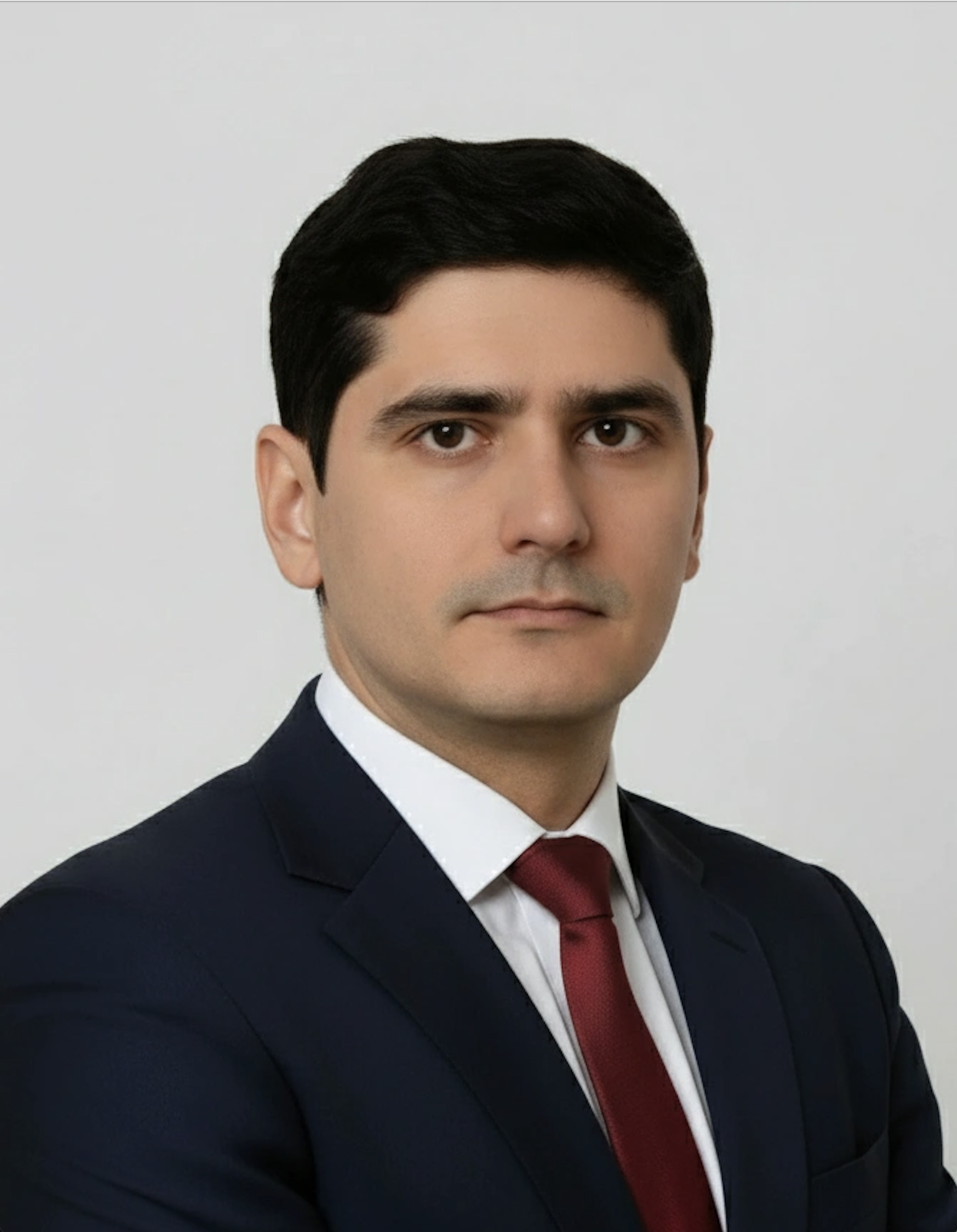
Daniel Gaiki
Co-founder & Director of Engineering
Daniel Gaiki, MSc, is a Senior Electronics Engineer at Ultrablanket Ltd., where he leads the design and testing of advanced control electronics for medical imaging applications. His expertise spans analogue and digital circuit design, PCB development, SMPS circuits, embedded systems, and power electronics. With over a decade of experience in medical imaging, aerospace instrumentation, and industrial automation, he has contributed to projects such as the ESA Comet Interceptor’s MIRMIS instrument at the University of Oxford and X-ray imaging control systems at Adaptix Ltd., and has held roles at Duvas Technologies, u-Blox (Switzerland), Legrand, and Whirlpool (Brazil).
Daniel holds an MSc in ICT for Smart Societies from Politecnico di Torino and a BSc in Electrical Engineering from UFSC, Brazil, with academic work in machine learning, IoT, and emotion-aware smart environments, and has published in Acta Astronautica and Engineering Technology and Applied Science Research. Daniel is recognised for his cross-cultural collaboration skills and technical versatility.